
Autocrats Are Collaborating on Next-Generation Internet Controls. Michael Caster Unpacks the Implications.

Satellite-based connectivity, open-source AI models, and other innovative technologies are transforming how people around the world share their views and access information. So, too, are shifting legal and normative approaches to tech governance—including enthusiastic efforts by authoritarian regimes to erode privacy, promote censorship, and tighten their control over digital spaces.
These trends have sweeping implications for democracy. They will impact how citizens learn, debate, and participate in political life; whether journalists and human rights defenders are able to gather accurate information about government abuses; and what strategies communities and civic groups can use to foster dialogue and build trust.
In conversation with frontline practitioners and leading analysts, NED’s International Forum for Democratic Studies is exploring what evolving digital infrastructures will mean for citizens in closed and closing spaces—and how the democracy community can adapt to defend free speech and information access.
Below, in our first post exploring the frontiers of digital freedom, ARTICLE 19’s Michael Caster examines the mounting challenge from authoritarian regimes that are collaborating to hone their internet controls. Drawing on his organization’s research into the transfer of tech and norms from Beijing to Tehran, he considers what authoritarian cooperation in the satellite era may mean for Iran—and beyond.
What the Beijing-Tehran Digital Authoritarian Nexus Means for the Rest of Us
Authoritarian regimes are sharing hardware and norms. Democracy actors need to address both.
By Michael Caster, ARTICLE 19 and Safeguard Defenders
From Myanmar to Ukraine to Iran, commentators have looked to satellite internet as a silver bullet for breaking through authoritarian internet blocks. This frontier technology has clear value in aiding circumvention and bolstering the digital resilience of frontline human rights defenders. Yet we are also beginning to see how authoritarian regimes can leverage their own satellite capacities to disrupt the free flow of information and extend next-generation digital controls.
We are now at a new chapter in a story that has been unfolding over years: digital authoritarian collaboration. Around the world, autocrats are not just developing their own innovations in high-tech control. They are sharing their hardware, software, and institutional censorship strategies with one another, with deeply concerning implications for human rights.
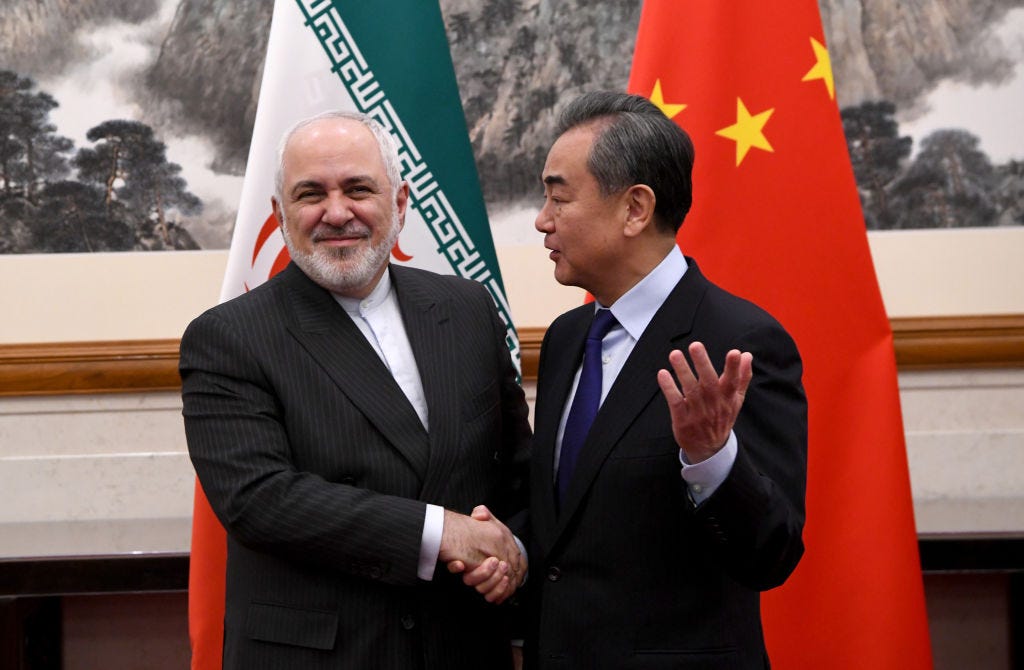
In our recent report Tightening the Net: China’s Infrastructure of Oppression in Iran, my organization, ARTICLE 19, analyzes one example of this unfolding dynamic. For more than fifteen years, Iran has not only imported the instruments of censorship and surveillance from the People’s Republic of China (PRC), but also drawn inspiration from the institutional and normative frameworks that underpin Beijing’s digital authoritarianism.
While the direct role of PRC entities in the country’s recent internet shutdowns is unclear, the wider political and technical architecture that keeps Iranian people’s voices from reaching the outside world reflects the impact, over years, of a global ecosystem of authoritarian learning. As we move toward new frontiers of information access and digital connectivity, civil society watchdogs should keep a close eye on how this multifaceted autocratic project is reaching into new domains of digital life.
The Beijing-Tehran Digital Authoritarian Nexus
The meaning of internet censorship has evolved dramatically since the late 2000s. In July 2009, the Chinese Communist Party (CCP) staged a brutal crackdown on an initially peaceful demonstration for Uyghur rights in the Uyghur region’s capital city of Urumqi. In its wake, CCP authorities plunged the northwestern region and its population of over 20 million people into a ten-month internet blackout. Among other goals, this shutdown aimed to keep information about the protest and ensuing crackdown from making it to the outside world.
General connectivity resumed in May 2010, but many foreign websites such as Facebook would never return to the “walled garden” of the PRC internet. As the capabilities associated with Beijing’s “Great Firewall”—a constellation of high-tech systems developed by the CCP to censor, filter, and surveil internet traffic—have developed and improved, precision censorship seems to have left little need for blanket shutdowns.
Internet shutdowns remain an escalating problem globally: In the years since 2009, they have become increasingly common in both democracies and autocracies, from Asia to Africa. Yet today, autocrats who feel threatened by digital connectivity can draw on a sophisticated playbook involving not only next-generation censorship technologies, but also legal, institutional, and normative frameworks to buttress content controls. Aided by outward technology transfer and active norms promotion, China’s influence has bolstered rising digital repression around the world.
Fast forward to December 2025, when nationwide protests erupted across Iran. Authorities responded with extreme brutality, killing an estimated tens of thousands and arresting countless more. In early January 2026, the regime launched a full-scale disruption of internet, phone, and mobile networks.
While Tehran had weaponized internet shutdowns in the past, by all accounts the January blackout was farther-reaching and more brutally enforced than previous episodes. Alarmingly for those who have looked to satellite internet as a digital censorship workaround, there were reports that Starlink connectivity was also affected. This shift likely reflects both increased technical capacity on Tehran’s part, and the political will to exercise tighter control over information and communications infrastructure.
Although China’s direct role in this specific escalation is not known—credible analysis points to the military-grade, Russian-origin Kalinka/Alinka electronic warfare system as the most likely culprit behind the Starlink outages—the CCP regime has been instrumental in fostering Tehran’s overall embrace of digital authoritarianism.
At the heart of the PRC’s authoritarian model of digital governance is its norm of “cyber sovereignty.” This doctrine, popularized by Beijing and its fellow autocracies for more than a decade, argues for extending national sovereignty to the internet in a manner that effectively gives carte blanche for state control over online information and expression.
Such an approach risks supercharging internet fragmentation. Furthermore, China’s vision of cyber sovereignty is at odds with the fundamental tenets of international human rights law, which hold that freedom of expression and other human rights, such as privacy and information access, are universal, indivisible, and interdependent regardless of jurisdictional boundaries. A mutual embrace of the CCP’s cyber sovereignty model has underpinned China-Iran cooperation in the digital domain.
Institutionalizing “Cyber Sovereignty”
2010 was a pivotal year for both the evolution of Beijing’s normative playbook and its transfer of digital tools and norms to Tehran. In 2010, the State Council published the White Paper on the Internet in China, a key document that began to articulate the concept of cyber sovereignty in earnest. Iran was an early, whole-hearted adopter. While authorities in Tehran had spoken about their own national or “halal” internet a few years earlier, 2010 saw the first serious steps toward the development of a closed Iranian National Information Network (NIN) modeled on China’s “Great Firewall.”
In that same year, the PRC company ZTE signed a US$130 million contract with the Telecommunications Company of Iran to initiate a nationwide monitoring system capable of deep packet inspection (a technique that enables content-level monitoring of internet traffic) and other network surveillance. Meanwhile, Huawei sought similar deals on censorship and surveillance equipment with MobinNet, the only nationwide wireless broadband provider in Iran at that time.
Since then, as Iran has further emulated China’s models for internet control, technology transfer has expanded to new domains—including Iran’s use of PRC BeiDou satellite navigation systems (China’s equivalent of the US-based Global Positioning System [GPS]). In 2015, Beijing and Tehran signed an MOU to initiate the transfer of BeiDou satellite location technology to Iran. In 2021, Iran gained access to BeiDou military-grade satellite signals, and in 2025 Tehran announced plans to fully adopt BeiDou over GPS. Although less obviously related to censorship and surveillance, these shifts may have important implications for Tehran’s control over the digital public square.
At the institutional level, there have been notable parallels in the evolution of PRC and Iranian internet regulators. In 2012, in part to oversee the NIN, Supreme Leader Ali Khamenei established the Supreme Council of Cyberspace (SCC). The SCC has since followed a trajectory of increasing control similar to that of the Cyberspace Administration of China (CAC), arguably the ideological and regulatory leader in China’s digital authoritarian model. While there is scant publicly available information on the dynamics of direct engagement between the two bodies, past and current SCC members have explicitly praised China’s model.
Today, Tehran appears to be taking its project of constructing cyber sovereignty to the next level. Digital freedom monitors report accelerating moves toward a tiered approach where accessing the global internet at all becomes a privilege available only to select Iranians. Others would be limited to the highly restrictive NIN—or, in the shutdown context, left entirely in the dark.
Satellite and the Future of Authoritarian Internet Controls
Iran’s early 2026 wave of internet shutdowns and controls reflected the legacy of longstanding investments in cyber sovereignty (our research predated the war with the U.S. and Israel that broke out in February 2026 and hence does not cover additional developments in this period). At the same time, these blackouts have global implications. They demonstrate that with networked authoritarians developing their own innovations at the frontiers of internet control, satellite internet is starting to show its limits as a tool to circumvent online censorship.
China and Russia have both invested heavily in counterspace technologies that can contribute to disrupting satellite internet. Some approaches involve interfering with GPS location data that these systems rely upon to synchronize internet terminals with satellites. There are also more precise forms of satellite internet jamming that specifically target the uplink and downlink radio frequencies used by the service in question. Since a 2017 agreement between the United States and China, BeiDou and GPS civilian satellite signals have become interoperable. While there are practical reasons for this, in theory, interoperability may also make it easier for Beijing to mimic and therefore interfere with civilian GPS signals (including for the purpose of disrupting satellite communications).
Against this backdrop, Beijing’s wider investments in satellite technologies could also broaden its digital repression and internet control capabilities. Most recently, in its 15th Five-Year Plan, launched in March 2026, Beijing articulates ambitions to aggressively push emerging technologies like satellite internet, which will position it to shape the contours of a changing digital communications landscape.
Just as China once developed BeiDou to challenge the U.S.-based GPS, it is looking now to challenge Starlink’s dominance in low Earth orbit (LEO) satellite constellations. Although China is currently far behind in deployment, the PRC’s designs on the LEO market may point toward a future where satellite users bump up against a replica of the “Great Firewall” in space.
In September 2025, a PRC space center launched a prototype satellite internet firewall featuring AI models for autonomous filtering, a milestone that demonstrates Beijing’s ability to extend content controls to satellite infrastructure. Such systems could allow the CCP to export cyber sovereignty even above the stratosphere, to countries partnering with Beijing through the Digital Silk Road (including Iran) and beyond.
The Challenge from Networked Authoritarian Blocs
The partnership between China and Iran is part of a wider web of networked authoritarian influence, which includes Russia among others. The interplay among PRC, Russian, and Iranian technologies and tactics for internet control demonstrates how networked authoritarian blocs represent a new threat to global internet freedom and human rights, especially at a time of global geopolitical realignment.
In addition to trading technical capacities, these blocs are working to undermine human rights at the governance level. A key factor reinforcing the threats to free expression is China’s promotion of what Foreign Minister Wang Yi has called “true-multilateralism,” not least in the realm of global digital governance. Through this rhetoric, the PRC seeks to shift the locus of gravity toward its own, alternative governance structures—such as the Shanghai Cooperation Organization, the World Internet Conference, or its recently proposed World AI Cooperation Organization—where networked authoritarianism can thrive. It also seeks to elevate an exclusionary vision of multilateralism, where international cooperation is limited to national governments, as opposed to multistakeholderism, which also involves non-state actors such as private companies, academics, and civil society.
Traditionally, multistakeholderism has been a fundamental principle of internet governance: As outlined in the São Paulo Guidelines, it promises to be more transparent and inclusive, especially for actors from the Global South. Beijing’s opposition to this approach reflects the CCP’s wider disdain for the role of independent actors in global governance. Although longstanding, these efforts are gaining new momentum in light of the PRC’s growing influence in UN digital governance forums, as well as its ever-expanding footprint in the development of AI and other emerging technologies.
The Task Ahead for Democracy’s Supporters
In its export of digital authoritarian governance, China is not just seeking to influence other autocracies. As we see in the latest Five-Year Plan, Beijing aims to accelerate the growth of its influence over standards and systems worldwide.
In tracking the rise of digital repression, ARTICLE 19’s research on cases from the Indo-Pacific to Iran point to the importance of understanding the interplay between technology transfer and the diffusion of norms. Looking ahead, to chart these unfolding dynamics, democracy actors will need to track not only the export of physical infrastructure equipment like Huawei middleboxes, Geedge censorship tools, or Hikvision surveillance systems, but also the ways in which other countries engage and partner with leading authoritarian powers on norms and institutions. These relationships, in turn, will shape the evolution of their capacity and political will to leverage technology for repression at home.
Michael Caster is the Head of the Global China Programme at ARTICLE 19, where he focuses on countering digital authoritarianism, and the lead author of Tightening the Net: China’s Infrastructure of Oppression in Iran, from which this article draws. He lived in China for two periods between 2008 to 2014, working with the underground human rights movement, and he is a co-founder of Safeguard Defenders. You can find Michael on X and Bluesky.